

If you're looking for a vegan omega-3 supplement, you've probably noticed iwi life.
Unlike traditional fish oil brands, iwi life gets its omega-3 from algae. The company grows its algae in the United States and builds its brand around three main ideas: plant-based EPA and DHA, proprietary absorption technology, and sustainability.
But there's an important question behind the marketing:
Is iwi life actually better than a conventional fish-oil supplement, or are you mainly paying more for a vegan and sustainability-focused product?
After looking at iwi life's current products, pricing, subscription terms, ingredient positioning, customer feedback, and the broader science around algae-derived omega-3s, the answer is more nuanced than the brand's marketing suggests.
iwi life is a legitimate supplement company with a distinctive algae-based approach. Its biggest advantage is that it provides direct EPA and/or DHA without relying on fish, krill, or conversion from plant ALA.
The biggest question is value.
Depending on the product, iwi life costs considerably more than many conventional omega-3 supplements. And while the company highlights clinical research around its proprietary AlmegaPL® ingredient, you should distinguish evidence for omega-3s generally, evidence for algal oil, and evidence for a particular iwi formulation.
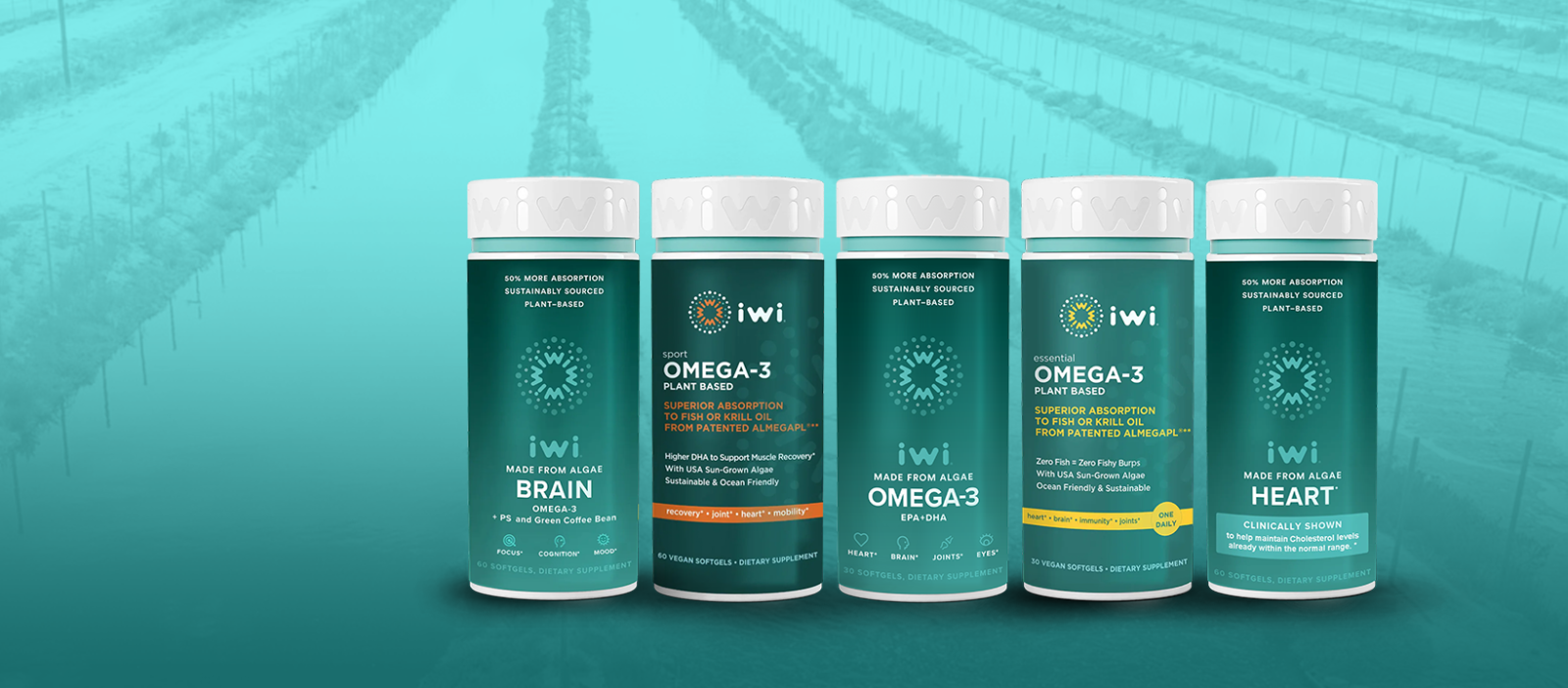
iwi life is worth considering if you want a vegan, fish-free source of EPA and DHA and care about sustainability, but its premium pricing makes the most sense for shoppers who specifically value those characteristics.
The current product line includes:
Individual products currently start around $22.99, with the flagship Omega-3 listed at $34 and Heart at $42. Subscription pricing can reduce the effective cost by up to 25% and includes free shipping.
The standard iwi Omega-3 provides one softgel per day, while the current label information states that the regular-size formula provides 150 mg EPA + 100 mg DHA per softgel. The Mini version provides approximately 125 mg EPA + 100 mg DHA per serving.
That is worth paying attention to because comparing omega-3 supplements by the total "fish oil" or "omega-3" number alone can be misleading.
Best fit: vegans, vegetarians, people avoiding fish/krill, environmentally conscious shoppers, and consumers who specifically want algae-derived EPA/DHA.
Less compelling: shoppers who simply want the cheapest high-dose EPA/DHA supplement available.
iwi life is a nutrition and algae-farming company focused primarily on omega-3 supplementation.
The company's premise is straightforward:
Fish don't create omega-3 from nowhere. Marine algae are an original source of EPA and DHA, and fish acquire these fatty acids through the food chain.
Instead of taking omega-3 from fish or krill, iwi life grows algae and extracts the omega-3 directly.
The brand currently describes its algae as being grown in the United States, including cultivation in desert environments using sunlight.
Its broader positioning combines:
That gives iwi life a much clearer identity than simply being another fish-oil company.
There are three major reasons.
Many plant foods contain ALA, including flax, chia, walnuts, and certain vegetable oils.
But ALA isn't the same thing as EPA and DHA.
The human body can convert ALA into EPA and DHA, but conversion is limited.
Algal oil provides a direct source of long-chain omega-3s, primarily DHA and, depending on the algae/formulation, EPA.
This is consistent with the broader nutrition literature: the NIH notes that algal oil is a vegetarian source of DHA and that some algal oils also provide EPA.
For people following vegan or vegetarian diets, this is the obvious benefit.
You don't have to use a fish-derived product to obtain DHA or EPA.
iwi life argues that going directly to algae avoids the need to harvest marine animals for omega-3.
That is central to the company's identity.
However, "algae-based" shouldn't automatically be interpreted as having zero environmental impact. Cultivation, processing, packaging, transportation, and manufacturing all have environmental footprints.
The more defensible claim is that iwi life offers a fish- and krill-free route to EPA/DHA, with sustainability as a major part of its production model.
One of iwi life's biggest differentiators is AlmegaPL®.
The company describes it as a proprietary algae-derived omega-3 ingredient containing polar lipids.
iwi life argues that this structure allows its omega-3 to be absorbed more efficiently than conventional fish oil, krill oil, and other algae oils.
The company currently advertises a 1.7x absorption advantage based on human clinical research and cites Kagan et al. as supporting evidence.
This is one of the areas where some context is important.
The broader scientific literature supports the idea that omega-3 bioavailability can vary depending on the chemical form and delivery system.
A 2025 review concluded that EPA/DHA bioavailability can differ according to source and chemical form, while also noting that short-term absorption differences don't necessarily translate directly into long-term clinical outcomes.
More recent randomized clinical research comparing microalgal oil with fish oil found that plasma DHA/EPA bioavailability from the microalgal supplement was non-inferior to fish oil over 6 and 14 weeks.
So the evidence supports algae as a credible and bioavailable EPA/DHA source.
It does not mean every algae omega-3 is automatically 1.7x better than every fish-oil product.
That's an important distinction when reading iwi life's marketing.
The standard iwi life Omega-3 is the brand's broad, everyday formula.
Current listed price:
$34 for 30 servings
Serving size:
1 softgel per day
The current product page states that the standard formula provides approximately:
per softgel.
The company positions it around:
The main selling point isn't simply the amount of omega-3.
It's the combination of:
EPA + DHA + algae source + proprietary polar-lipid formulation + vegan positioning.
The standard Omega-3 is the logical starting point if you want a general-purpose iwi product rather than a formula targeted specifically at the heart, brain, or sports recovery.
It's also the easiest product to compare with a conventional fish-oil supplement.
At $34 for 30 servings, the regular price is significantly higher than many basic omega-3 products.
You're paying for more than just EPA/DHA:
Whether those extras are worth the premium is a personal value decision.
If swallowing large softgels is a problem, Omega-3 Minis are one of iwi life's more practical innovations.
The company says the smaller capsules have a slightly different omega-3 profile:
The total EPA/DHA is therefore somewhat lower than the regular-size capsule.
That tradeoff is simple:
smaller capsule vs. slightly different omega-3 dose.
If you're someone who routinely avoids fish-oil supplements because of capsule size, the Mini format may make iwi life considerably easier to use consistently.
The DHA formula is more targeted.
Current listed price:
$26 for 30 servings
Serving size:
2 softgels per day
The product is positioned specifically around DHA for:
This is particularly relevant for someone who wants DHA rather than a balanced EPA/DHA formula.
The brand also offers longer-term packages and subscriptions that lower the cost per serving.
This product makes more sense if your nutritional goal specifically calls for DHA.
If you simply want a general omega-3 supplement, the standard Omega-3 formula is easier to understand.
iwi Heart is one of the brand's more interesting products because it has a more specific formulation and clinical positioning.
Current listed price:
$42 for 30 servings
Serving:
2 softgels per day
The company says its AlmegaPL® ingredient has been studied in clinical trials and that Heart helps maintain healthy cholesterol and triglyceride levels already within the normal range.
iwi life also cites two independent studies in its product description.
That's more substantial than simply saying "omega-3 is good for your heart."
But it still doesn't mean Heart is a treatment for cardiovascular disease.
The company itself includes the standard supplement disclaimer that its claims have not been evaluated by the FDA and that the product isn't intended to diagnose, treat, cure, or prevent disease.
Heart is primarily aimed at someone who wants a targeted EPA-oriented supplement rather than a general omega-3.
It is also one of the products where iwi life's proprietary ingredient story is most commercially important.
This is an area where marketing claims can easily become exaggerated.
Omega-3 research is extensive, but results depend on:
The NIH notes that seafood and omega-3 supplements can increase EPA/DHA levels, but the evidence for health outcomes varies by condition.
The FDA has permitted certain qualified health claims for EPA/DHA and cardiovascular or blood-pressure outcomes, but explicitly describes the evidence underlying those claims as inconsistent and inconclusive.
That means a responsible iwi life review shouldn't say:
"Omega-3 prevents heart disease."
A more accurate statement is:
EPA and DHA have been extensively studied for cardiovascular health, but the clinical effects of supplementation depend on dose, formulation, population, and outcome.
The Brain formula is currently listed at $34 for 30 servings.
Serving size:
2 softgels per day
The formula combines algae-derived EPA/DHA with:
The company positions it around:
It contains less than 1 mg of caffeine according to the company's FAQ.
The Brain formula is not simply an omega-3 supplement.
It's a combination product.
That means you should evaluate it differently from standard Omega-3.
If you only want DHA/EPA, you're paying for ingredients you may not specifically need.
If you want a broader cognitive-nutrition formula, the additional ingredients become part of the value proposition.
The product page contains claims suggesting customers may feel "brightened brain energy" very quickly.
That's a customer/brand experience claim, not the same as demonstrating clinically meaningful improvements in cognition.
The broader scientific literature supports the importance of DHA in brain structure and function, but that doesn't mean taking an omega-3 supplement will automatically make a healthy person more focused or productive.
The newer Omega-3 Sport formula is designed around active consumers.
Current listed price:
$22.99 for 30 servings
Serving size:
2 softgels per day
The formula contains a higher DHA blend than the standard product and is marketed around:
The brand says it is suitable not only for serious athletes but also for recreationally active consumers.
This is probably one of the more accessible iwi products because the entry price is lower than the standard $34 Omega-3.
However, the product should still be evaluated based on its actual EPA/DHA content rather than the word "Sport" on the label.
Current prices vary by product.
| Product | Current listed price |
|---|---|
| Omega-3 Sport | $22.99 |
| DHA | $26 |
| Omega-3 | $34 |
| Omega-3 Minis | $34 |
| Brain | $34 |
| Heart | $42 |
| 60 Day Brain Bundle | $65.98 |
| Gift Cards | From $25 |
Prices and promotions can change.
The subscription program currently offers discounts of up to 25%, plus free shipping.
That can make iwi life considerably more competitive with its regular pricing.
Compared with generic omega-3 supplements:
Yes, it can be.
But that's not necessarily a flaw.
You're buying a differentiated product with:
The real comparison is therefore not:
"Is $34 expensive for one bottle?"
It's:
"Are the source, formulation, convenience, and sustainability characteristics worth paying a premium for?"
For someone who simply wants the cheapest way to consume EPA/DHA, iwi life may be difficult to justify.
For a vegan consumer who specifically wants algae-derived EPA/DHA, the comparison changes.
iwi life offers a subscription program.
The current program advertises:
The FAQ says customers can modify upcoming shipments up to three days before shipment.
This is useful for a supplement because omega-3 is typically something people take consistently rather than once.
However, don't subscribe simply because the discount looks attractive.
First determine:
The good news is that iwi life explicitly provides skip/cancel controls.
For U.S. orders, iwi life currently offers:
Free shipping on subscriptions and orders over $50.
The company says standard delivery generally takes approximately 6–8 business days.
Shipping may be handled through carriers such as:
The company currently ships within the United States.
For shoppers outside the U.S., iwi life says its products may be available through iHerb depending on country availability.
The current online return policy allows returns of eligible unopened, undamaged products within 30 days.
A $5 bottle restocking fee applies to returned orders.
Return postage is the customer's responsibility.
Damaged or unusable products may be replaced after contacting customer service.
One important detail:
Orders cannot generally be modified or canceled once they have been processed.
That makes it worth checking your subscription settings carefully before the next shipment.
iwi life publishes customer reviews on its own website and also has a dedicated page pointing readers toward reviews from Thingtesting.
The on-site reviews frequently mention:
These are useful observations about user experience.
They are not the same thing as clinical evidence.
For a supplement review, that's an important distinction:
Customer reviews can tell you whether people like taking the product. They cannot prove that the product produces a specific medical outcome.
One of the strongest practical selling points for many omega-3 shoppers is the absence of the classic fishy aftertaste.
Because iwi life uses algae rather than fish or krill, consumers who dislike the taste or burping associated with traditional fish oil may find the format more appealing.
The brand's own customer testimonials repeatedly mention the lack of fishy aftertaste or burps.
Individual experiences will obviously vary, but this is one area where the algae format has an intuitive consumer advantage.
Yes.
The company describes its omega-3 products as:
This is one of the clearest reasons to choose iwi life over conventional fish or krill oil.
However, always check the current label if you have a severe allergy or dietary restriction because formulations and manufacturing conditions can change.
Sustainability is one of the central reasons iwi life exists.
The company grows algae rather than harvesting fish or krill for omega-3.
It also promotes:
The ecological argument is plausible at a high level: algae can provide EPA/DHA without harvesting marine animals.
But sustainability is a systems-level question.
If environmental impact is your primary reason for purchasing iwi life, it is worth evaluating the complete lifecycle—including cultivation, energy use, processing, packaging, and shipping—rather than assuming "algae" automatically means environmentally superior in every respect.
Yes, iwi life appears to be a legitimate operating supplement company.
It has:
The website also states that iwi products are sold through specialty stores, pharmacies, independent health-food stores, and online channels.
So this isn't an anonymous supplement storefront.
The more useful question is not whether iwi life is "real."
It's whether the premium price and proprietary formulation are justified for your needs.
This question comes up frequently with supplements.
iwi life is a dietary-supplement brand, and its website carries the standard statement:
Its product claims have not been evaluated by the FDA and the products are not intended to diagnose, treat, cure, or prevent disease.
That's normal language for dietary supplements.
It also means consumers shouldn't interpret "science-based," "clinically studied," or "supports heart health" as equivalent to FDA approval of the product as a drug.
There isn't a universal answer.
The broader evidence supports algal oil as a legitimate source of omega-3.
The NIH specifically identifies algal oil as a vegetarian source of DHA, with some products also containing EPA.
A recent randomized trial also found comparable bioavailability between microalgal and fish-oil supplements.
So the question is less "Does algae work?" and more:
Which source, dose, formulation, and price make sense for you?
Krill oil is another common premium omega-3 alternative.
Krill contains EPA and DHA in phospholipid-containing structures, which some research suggests may influence bioavailability.
But the evidence is mixed.
iwi life has a simpler consumer distinction:
No animal marine source.
If you're vegan or specifically avoiding marine-animal products, algae is the obvious option.
If you're not, the comparison should focus on actual EPA/DHA content, formulation, price, and evidence rather than assuming one source is universally superior.